
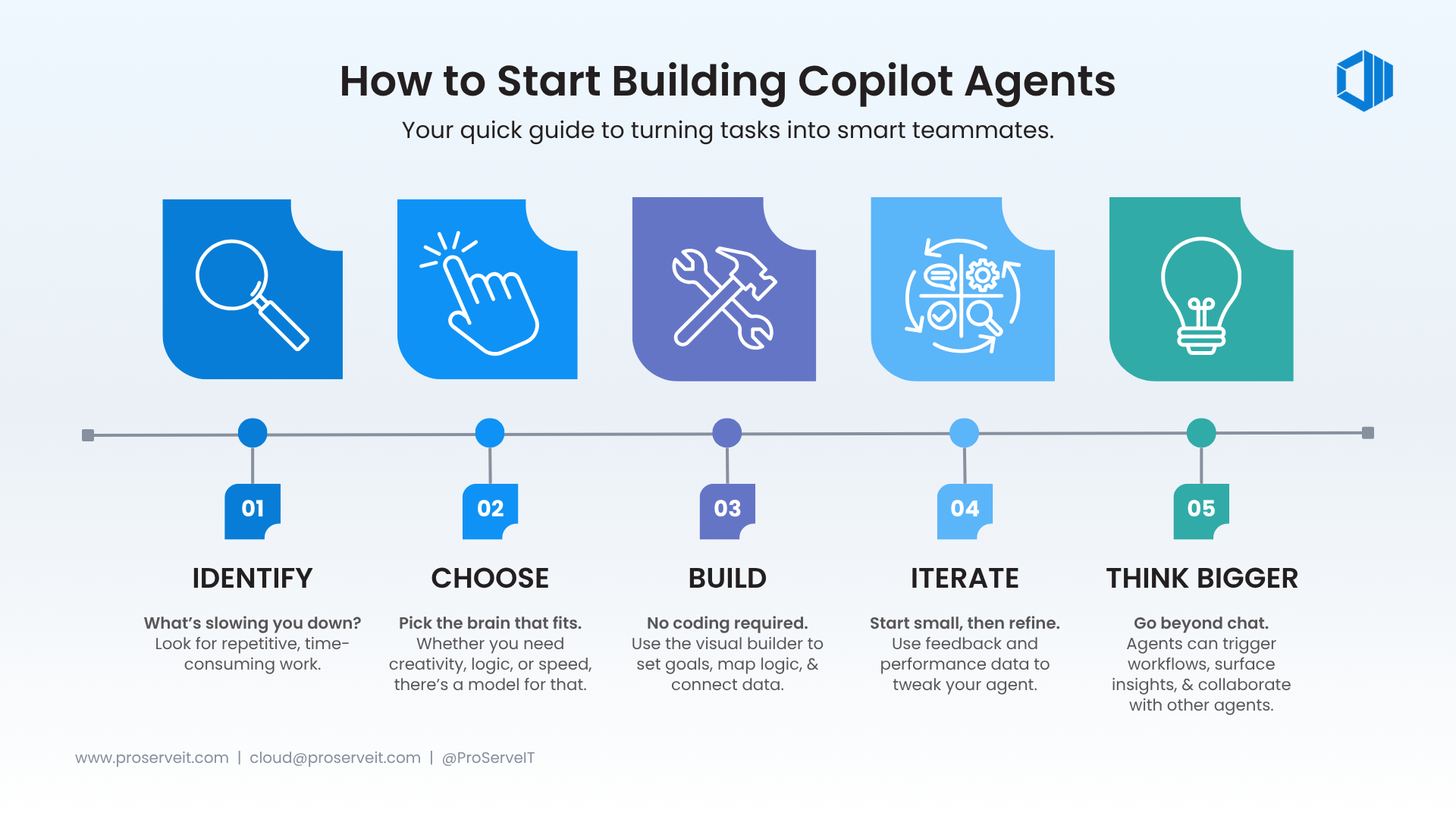
This is a strong topic with high potential for B2B traffic, especially as organizations move from “playing with AI” to “productionizing AI.”
To make this SEO-friendly and drive traffic, I have optimized the structure for Google’s E-E-A-T (Experience, Expertise, Authoritativeness, and Trustworthiness). I have added a TL;DR, optimized the headers for long-tail keywords, refined the comparison table, and included a Meta Data section for your CMS.
Here is the publication-ready version.
AI Agents vs. MCP vs. Copilot Studio: The 2026 Reality Check for Enterprise
Category: Artificial Intelligence / Enterprise Architecture
Reading Time: 5 Minutes
Last Updated: January 2026
Executive Summary (TL;DR)
-
The Problem: Teams treat AI Agents, MCP, and Copilot Studio as competitors. They are actually complementary layers of a stack.
-
The Reality: Agents do the thinking, MCP handles the connection, and Copilot Studio provides the governance.
-
The Fix: Successful 2026 architectures combine all three rather than choosing one.
The Confusion Nobody Talks About
In 2026, the enterprise AI landscape is noisier than ever.
-
AI Agents are dominating the headlines.
-
MCP (Model Context Protocol) is being hailed as “the backbone of agentic systems.”
-
Microsoft Copilot Studio is positioned as the safe, corporate answer to chaos.
Yet, inside real engineering teams, a different, more frustrated conversation is happening:
“Why did our AI agent break immediately after the POC?”
“Why does IT governance block every autonomous workflow?”
“Why does everything work in the demo but fail in production?”
The issue isn’t the tooling. It is a fundamental misunderstanding of the architecture.
Where Most Teams Get It Wrong
The biggest mistake organizations make is assuming these three technologies compete with each other. They don’t.
Failures usually happen because:
-
AI Agents are treated like deterministic software (which they aren’t).
-
MCP is expected to behave like a product (when it is a protocol).
-
Copilot Studio is pushed into deep automation use cases it wasn’t built for.
To build a stack that actually works, you need to stop comparing them and start layering them.
The Breakdown: What They Really Are (No Hype)
1. AI Agents: The “Thinkers”
AI Agents shine when reasoning, autonomy, and decision-making are required. Unlike a standard chatbot that answers questions, an agent executes tasks.
-
Best For: Multi-step reasoning, tool chaining, and semi-autonomous workflows.
-
The Trap: They struggle with predictability, strict governance, and fully auditable outcomes.
2. MCP (Model Context Protocol): The “Connective Tissue”
MCP is neither an AI agent nor a User Interface. It is a coordination layer. Think of it as the USB-C port for your AI models—it standardizes how context is exchanged and how tools are accessed.
-
Best For: Structured orchestration, multi-agent systems, and long-term scalability.
-
The Trap: Teams often expect it to have a business-friendly interface or out-of-the-box workflows. It is infrastructure, not a frontend.
3. Copilot Studio: The “Governance Layer”
Copilot Studio is built for controlled enterprise usage. It is the safe container that allows business users to interact with AI without leaking data or breaking compliance.
-
Best For: Security, business user adoption, and integration with the Microsoft 365 ecosystem.
-
The Trap: It is limited when deep autonomy or complex, custom agent-to-agent orchestration is needed.
Comparison: The 2026 Decision Matrix
If you are trying to decide “which one to buy,” you are asking the wrong question. However, understanding their strengths is vital for placement.
| Requirement | AI Agents | MCP (Protocol) | Copilot Studio |
| Primary Role | Autonomous Reasoning | Standardization & Connection | Governance & Interface |
| Enterprise Governance | ❌ Weak (Wild West) | ⚠️ Custom Implementation | ✅ Strong |
| Multi-tool Orchestration | ⚠️ Complex to build | ✅ Native / Strong | ❌ Limited |
| Business User Access | ❌ Low | ❌ None (Backend) | ✅ High |
| Scalability | ⚠️ Variance | ✅ High | ⚠️ License/Platform dependent |
The Architecture That Actually Works
Organizations that succeed in 2026 don’t choose one of these. They combine them into a unified stack.
The “Sandwich” Architecture:
-
Top Layer (Copilot Studio): The interface. This is where the user interacts. It handles authentication, logging, and basic intent recognition.
-
Middle Layer (MCP): The pipe. When the Copilot needs to access external data or a specific tool, it uses the Model Context Protocol to standardize that request.
-
Bottom Layer (AI Agents): The workers. Specialized agents receive the request via MCP, perform the complex reasoning, and return the result up the chain.
Why this wins:
-
Survives Audits: Copilot Studio handles the compliance.
-
Scales: MCP handles the connections.
-
Innovates: Agents handle the intelligence.
What is the Difference Between Traditional ML and Federated Learning
What is the Difference Between Distributed Machine Learning and Federated Learning
What is SMOTE in Machine Learning
What are optimizers in machine learning
Google Earth Engine vs ArcGIS: Which Geospatial Platform Is Best
Frequently Asked Questions (FAQ)
Is MCP replacing AI agents?
No. MCP makes agents manageable at scale. It is the protocol that allows agents to talk to systems (and each other) easily.
Can Copilot Studio build autonomous AI agents?
Not fully. Copilot Studio prioritizes control over autonomy. While it has “agent capabilities,” it is designed for guided, deterministic flows rather than open-ended reasoning.
Which is best for startups vs. enterprises?
-
Startups: AI Agents with lightweight MCP-style orchestration (speed to innovation).
-
Enterprises: Copilot Studio combined with MCP (safety and governance).
Final Takeaway
Most AI initiatives don’t fail because of bad models. They fail because architecture decisions are made too late.
Tools evolve. Features change. But the foundations of Protocol (MCP), Governance (Copilot), and Intelligence (Agents) are how you survive the shift.